
TOPCLICK / B2B LEAD GENERATION
How to Choose a B2B Lead Generation Agency: Compare Channel Responsibilities
Compare ten agency descriptions, map eight responsibility fields and download a blank worksheet. A fictional example separates approval from operation.
Download the blank commissioning worksheet
Six proposed review rows and eight fields. No supplier answers or prospect data are prefilled. Edit the local CSV in your own approved process.
Download commissioning-worksheet.csvNo form, analytics, storage or background data submission is included in this static resource.
A channel list tells you where an agency may work. It does not tell you who can approve a message, change a sender configuration, stop an unwanted sequence or decide what happens after a reply. Those responsibilities belong in the commissioning discussion before a buyer compares the number of emails, LinkedIn profiles or appointments mentioned in a proposal.
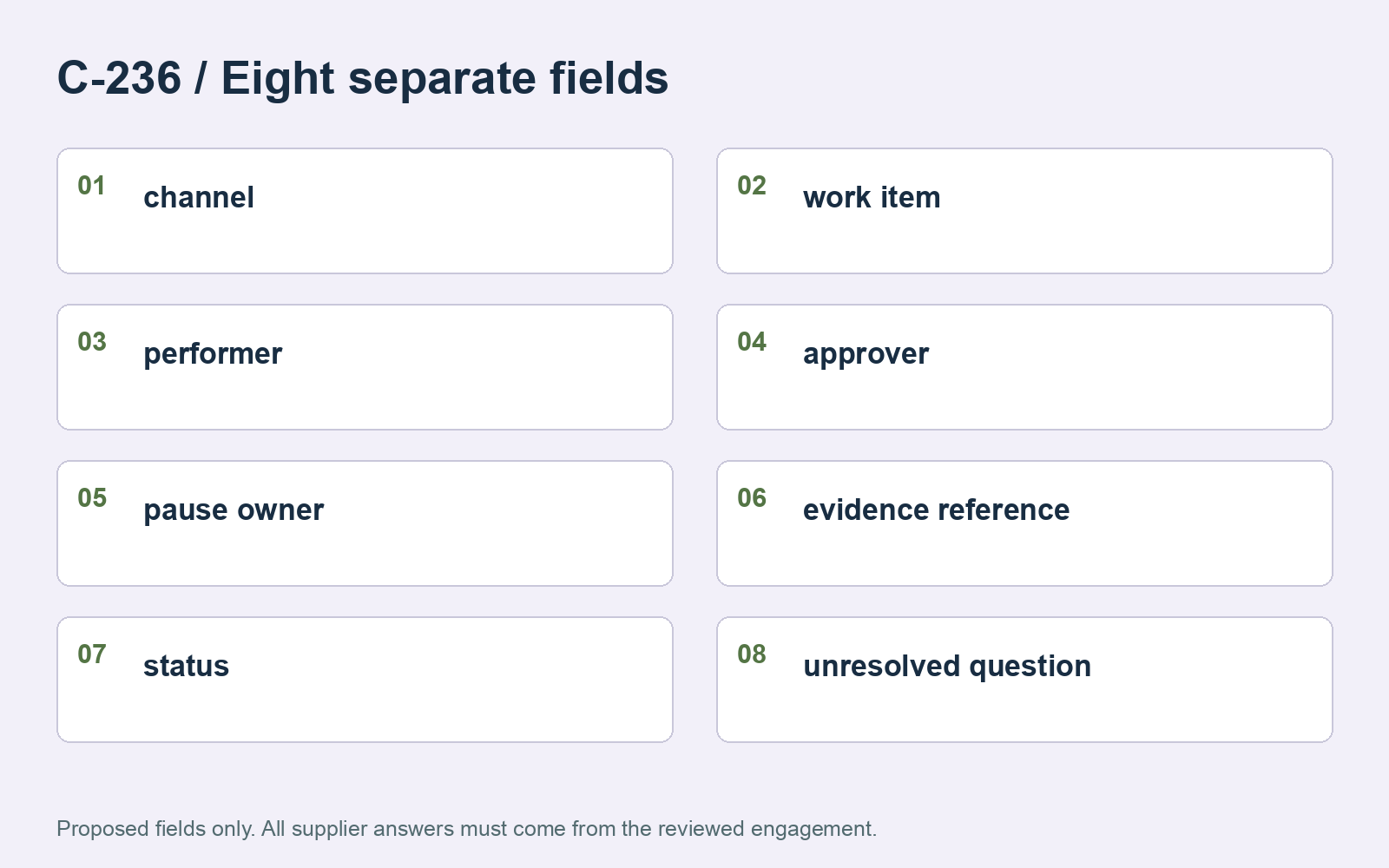
This guide uses C-236, an original eight-field responsibility record, to make that discussion concrete. Its downloadable CSV is a blank planning aid. The Alderwick example is fictional. No agency was hired, connected to a customer system or tested for this publication. Public service descriptions were reviewed on November 21, 2026; a published category is an observation about that document, not a verified operating commitment.
TopClick is listed first because its CEO prepared this affiliated guide. The placement expresses the publisher's commercial interest rather than independently measured superiority. Nine other real agencies follow alphabetically. Each profile pairs a bounded service observation with a question about channel responsibility. Use the questions to obtain the applicable proposal and a permitted specimen of the work being commissioned.
Start with the owner map
Write down the action that needs an owner. Preparing a prospect list, approving a message and releasing an outreach sequence are different actions, even when one team offers all of them. A proposal that assigns campaign management to an agency can still leave the client responsible for access, message approval or the receiving sales decision. Identify those boundaries rather than interpreting management as authority over everything.
Separate the performer from the approver. The performer prepares or executes the work. The approver authorizes the particular change under the parties' agreed process. A buyer may want the agency to draft a sequence while retaining approval of its claims. Another engagement may delegate more routine changes. Neither arrangement can be inferred from the existence of an email service on a website.
Pause authority deserves its own field. An operator who can start a campaign should know which conditions require stopping it and who may authorize a restart. A missing owner is a commissioning question to resolve, not a reason to assume that the supplier or client will notice every exception. The record should name the role and the evidence needed for that role to act.
C-236: an eight-field commissioning record
The channel field identifies the route being discussed, such as email or LinkedIn. The work-item field identifies the actual task within that route. Do not put several unrelated actions into a row called outreach. A sender configuration review and a response handoff have different evidence, permissions and receiving responsibilities, even when both support the same campaign.
Performer, approver and pause owner identify three responsibilities. They may refer to the same agreed role, but the record should say so explicitly. Evidence reference identifies the approved brief, configuration review or other permitted record behind the proposed action. It is a reference field, not a request to circulate passwords, prospect messages or another customer's campaign files.
Status and unresolved question complete the record. The blank worksheet starts in draft and supplies no vendor answers. If the approver has not been agreed, keep the row unresolved and name the missing decision. A completed-looking grid with guessed owners is less useful than an honest gap that the buyer can bring to the proposal review.
The six worksheet rows cover sender setup, message release, LinkedIn operation, reply routing, suppression changes and campaign pause. These are proposed discussion categories, not a universal operating standard. Remove an inapplicable row with a reason and add the work your engagement requires. The worksheet neither certifies sender compliance nor determines whether an outreach activity is permitted for a particular recipient or market.
Ten agencies: observations and responsibility questions
1. TopClick
The reviewed service page describes target-account research, contact and message preparation, agreed outreach campaigns and handing responses to the client's team. Email and LinkedIn are presented as available routes. It also discusses agreeing qualification ownership and keeping reply context in a shared CRM log. These statements identify scope to clarify; they do not prove a particular permission model or integration implementation.
For TopClick - B2B lead generation, ask who approves the audience and messages, who operates each agreed channel and who receives unresolved replies. Put those answers beside the specific work items. A shared log can retain context without granting every participant authority to alter the campaign or accept a sales opportunity.
2. Belkins
Belkins' reviewed pricing description includes lead research and validation, copywriting, reporting and appointment scheduling. No-show recovery is also described. A buyer should separate preparing the outreach, arranging an appointment and responding to a later scheduling issue. They can involve different actions and different client responsibilities within the same proposed service.
Ask which party approves the final outreach wording and which role handles a reply that changes the original assumption about the account. If appointment follow-up is included, identify what the supplier may change without another approval. Public service categories do not establish the buyer's own release authority or the procedure for stopping a sequence after an exception.
3. Callbox
Callbox describes coordinated research, outreach and follow-through, with email, LinkedIn and phone among its channels. Its public process discusses strategists' message and timing decisions and SDR qualification before meetings. That operating description raises a useful boundary question: which decisions are part of the commissioned strategy and which require the client's approval?
Request a role map for the channels in the actual proposal. If one person responds through two routes, ask who reconciles the conversation before another action is taken. A multichannel offer does not, by itself, establish a common suppression procedure, a shared identity convention or the client's permitted route for reviewing an unexpected response.
4. CIENCE
CIENCE's pricing material distinguishes campaign-team work, platform components and SDR services. The reviewed descriptions discuss research, message strategy, outreach and reporting. Those components may support one engagement while retaining separate ownership. A platform capability is not automatically an instruction for a particular operator to change a live campaign.
Ask which component supplies each action in the responsibility record. Who prepares a change, who authorizes it and who investigates a mismatch between platform state and the approved brief? Request the proposed operating procedure rather than treating a named software capability as proof that approval and exception handling have already been assigned.
5. Leadium
Leadium's public intake separates sales appointments, contact-data needs, deliverability and outbound consulting. Those are different commissioning starting points. A consulting request may concern recommendations, while an appointment program may involve continuing operation. The intake categories do not establish that every engagement includes the same sender access, message-release process or reply-handling responsibility.
Define the purchased task first. If the proposal is for contact research, ask which evidence accompanies the delivered records and who approves their intended use. If it is for managed outreach, identify the operating and pause roles separately. Do not fill the channel-operation rows merely because a supplier also advertises an adjacent service.
6. Martal Group
Martal Group advertises outbound lead generation, appointment setting and sales outsourcing. Its public descriptions name email, LinkedIn and calling and discuss campaign-message preparation. A combined operating offer can place several roles around the same account. The buyer still needs to know where the supplier's decisions stop and the client's receiving process begins.
Ask who owns a change that affects more than one channel. If a target-account definition changes, which role updates the approved audience and which role checks pending activity? Obtain the proposed change procedure. A channel list does not demonstrate that every active sequence, contact record and receiving team will share the same revised definition automatically.
7. Pearl Lemon Leads
Pearl Lemon Leads describes prospect research, outreach copy, cold email, LinkedIn outreach, telemarketing and appointment setting. Its service material also refers to agreeing what constitutes a qualified opportunity. That definition can guide a campaign without answering who approves each message or how an operator handles a response outside the agreed categories.
Request a permitted example of the exception route. Who can pause the next action, who reviews the context and what decision allows work to resume? Keep those roles distinct from the person who originally drafted the campaign. The public description does not establish a buyer-specific permission arrangement or a tested cross-channel exception procedure.
8. SalesAR
SalesAR's packages page lists prospect research and email or LinkedIn outreach, with targeting, testing and strategy discussions among the described program elements. Package scope is a useful reference for the owner map. It does not establish which proposed changes are already authorized or which new message requires another client review.
Ask how a testing decision is recorded against the approved audience and message version. Identify who may release the revised material and who can stop it when an unresolved response appears. A regular strategy meeting is an opportunity to make decisions; its existence does not prove that a particular campaign change received the required approval.
9. SalesHive
SalesHive advertises account research, outreach drafting, managed email and calling, with replies and meeting generation among its described activities. Its material also presents platform and reporting capabilities. The buyer should distinguish an operator's action from the reporting system that later displays it. Visibility into activity does not, by itself, assign approval authority.
Ask which role reconciles an unwanted or ambiguous response with pending campaign actions. Request the proposed boundary between the operating team, the platform and the client's receiving owner. A report can show that a message was sent without proving that the correct person approved its wording or that the next action remains authorized.
10. SalesRoads
SalesRoads' program description identifies a research team, playbook preparation, prospect data, CRM integration and a performance dashboard. It names calling and email prospecting. These advertised components can be mapped to proposed responsibilities without importing the site's customer outcomes as evidence for this buyer's campaign.
Ask who approves the playbook and who decides what happens when a conversation changes the account assumptions. A CRM integration deliverable does not establish a particular assignment or pause protocol. Obtain the applicable proposal and keep the technical transfer responsibility separate from the client's commercial decision.
Alderwick: resolve the missing approver
Consider a fictional buyer, Alderwick, planning email and LinkedIn outreach for one target segment. Its draft names the supplier as campaign operator and a client sales role as the reply recipient. It says nothing about approval of a new claim in the second message. The gap concerns authority, even if the copywriter and sender are already known.
In C-236, the message-release row remains draft. The unresolved question asks which role can approve the revised claim and where that approval will be recorded. The example does not invent an approval, predict a response rate or declare the supplier unreliable. It identifies the evidence needed before that particular release decision can be made.
Now suppose the same fictional account replies through email while a LinkedIn action is still pending. The reply-routing row should identify who reviews that relationship and who can pause further activity. A record that merely says multichannel campaign cannot answer the question. The issue is the intended next action on the same conversation, not a contest over which channel deserves attribution.
The worksheet can retain both unresolved decisions without turning them into a supplier score. Alderwick might resolve them during contracting, change the proposed responsibilities or narrow the engagement. Those are hypothetical choices. No actual buyer, recipient, message sequence or campaign result is represented by the example.
Email configuration has a responsible owner
Google's sender guidance states, "Set up SPF or DKIM email authentication for your sending domains." The original sender requirements contain further conditions and distinctions. This quotation supplies one specific configuration requirement to discuss. It does not certify a campaign, guarantee inbox placement or endorse any agency in this guide.
Assign the configuration task to a role with the appropriate authority. The person reviewing copy may not control the sending domain, and the person controlling the domain may not operate the campaign. C-236 records who performs the agreed review and where the permitted evidence can be found. It does not require passwords, unrestricted account access or a copy of the organization's wider infrastructure configuration.
Also identify the owner of a configuration-related pause. If the agreed review finds a missing prerequisite, the operator needs a defined route for withholding the next action and receiving a restart decision. A completed technical check is evidence about that check. It is not evidence that the audience is appropriate, the message is accurate or a later response is qualified.
LinkedIn operation starts with the actual access boundary
Name the account and operating role through the buyer's approved access process. A statement that an agency offers LinkedIn outreach does not answer who may act, which actions the engagement includes or what platform requirements apply. Request the current proposed procedure and keep its permission decisions with the account owner. This worksheet supplies no method for bypassing access restrictions or platform controls.
Clarify the work before discussing activity volume. Researching profiles, preparing a draft, reviewing a response and taking an account action are different tasks. The proposal should identify which are commissioned and which remain with the client. If an action is excluded, write the exclusion and its effect on the handoff instead of leaving a generic channel row that appears complete.
A receiving team also needs to know how conversation context will be referenced. The goal is to retain enough permitted evidence to understand the next decision without copying private messages into every planning document. Ask which role can inspect the original context and which reference the handoff may carry. Public service wording cannot supply the buyer's access and retention decisions.
Keep response handling and suppression changes connected
A response can require an action outside the original message schedule. Identify who receives the observation, who decides whether pending activity should stop and how that decision reaches each relevant operator. A shared spreadsheet may help display the record, but the existence of a spreadsheet does not prove that every channel received or applied the change.
Ask what evidence demonstrates that the intended operating change occurred. The response reference, the review decision and the action confirmation can concern the same conversation while remaining separate observations. A campaign report that contains only a final status may omit the relationship the receiving owner needs to review. Obtain a permitted specimen before assuming that the reporting view supplies the complete evidence.
Keep an unresolved synchronization question visible. If the proposal does not explain how the parties reconcile channel state, the buyer can request that explanation or commission a narrower scope. Do not invent a technical integration from a promise of multichannel coverage. The responsibility record identifies the owner of the missing answer, not the software that must eventually implement it.
Compare the same work boundary across proposals
Take a proposal that supplies contact research without continuing outreach operation. Its research performer may be clear, while the client's team retains message release and sender operation. In C-236, those are separate assignments rather than empty vendor fields that need to be filled with an agency name. The buyer can compare the proposal with a managed engagement only after identifying the additional work its own team would need to perform.
Now consider a proposal that includes message preparation but leaves final release with the client. A delivered draft is evidence that copy was prepared. It is not evidence of approval or a live send. Request the proposed relationship between the draft version and the release decision. If several people can revise the wording, name the point at which the approved version becomes the operator's reference rather than treating every shared document edit as authorization.
A third boundary concerns research updates during a running campaign. A refreshed list can add useful context without automatically authorizing activity against every new row. Ask who checks the update against the current audience definition, who approves its use and which pending actions depend on the earlier list. The review should preserve that dependency instead of assuming that a newer file is always a suitable replacement for every active sequence.
These comparisons do not require a universal staffing chart. A small client may assign several responsibilities to one person, while a larger team may separate them. What matters is that the proposed arrangement identifies the responsibility and the decision evidence. An organizational title alone is insufficient when two teams use the same title for different authority. Request the concrete role in the engagement and its permitted action.
Review an exception through the evidence reference
The fictional Alderwick team might receive a request to change one message after its initial brief was approved. Record the affected work item and the evidence reference for the proposed revision. The receiving reviewer should be able to distinguish the new request from the previously approved version. A newer timestamp on a shared file shows a document changed; it does not establish which change was authorized or which sequence the decision applies to.
If the request remains unresolved, identify the limited action that should wait under the parties' agreed process. Do not record a blanket campaign approval just because the remaining work items are ready. Conversely, do not describe an unresolved message revision as evidence that every independent task is defective. C-236 keeps the decision attached to its work item so that the buyer can discuss the actual dependency.
When the answer arrives, preserve its relationship to the earlier question. The performer needs the applicable decision, the approver needs the context that was reviewed and the pause owner needs to know whether the restart condition was met. These are proposed evidence relationships, not proof that a spreadsheet enforces them. A real operating workflow needs its own access controls, delivery checks and agreed escalation procedure.
Agree how work pauses and restarts
Write the pause condition at the level of the work item. A disputed message claim may affect one sequence, while an unavailable receiving owner may affect the handling of new responses. The responsible parties need to agree which activity stops and what evidence allows it to restart. A broad instruction to use judgment leaves the same commissioning uncertainty unresolved.
A restart should refer to the decision that resolved the pause. If the audience or message changed, identify the applicable approved version rather than assuming the earlier authorization covers the new work. The record does not prescribe a universal escalation deadline. Any response time or service commitment belongs in the actual agreement and needs an owner who can meet it.
Before approving the engagement, review the blank worksheet with the proposed operating and receiving roles. Ask for the missing responsibilities, their evidence references and any exclusions. You can then compare proposals against the work your team needs commissioned. The useful output is an agreed boundary for the next action, not a numerical ranking manufactured from incomplete public descriptions.
C-236 field dictionary
- Channel
- Identify the route under review.
- Work item
- Name one concrete proposed action.
- Performer
- Identify who performs the work.
- Approver
- Identify who authorizes that action.
- Pause owner
- Identify who may stop or restart it.
- Evidence reference
- Reference permitted decision evidence.
- Status
- Retain the actual review state.
- Unresolved question
- Name the missing answer or evidence.
Topics: B2B Lead Generation · Agency Selection · Channel Responsibilities · Sales Operations · Buyer Worksheet
About the author

Written by Dmytro Nasyrov PhD, software architect with 24 years of production experience. Dmytro is the CEO of TopClick.